
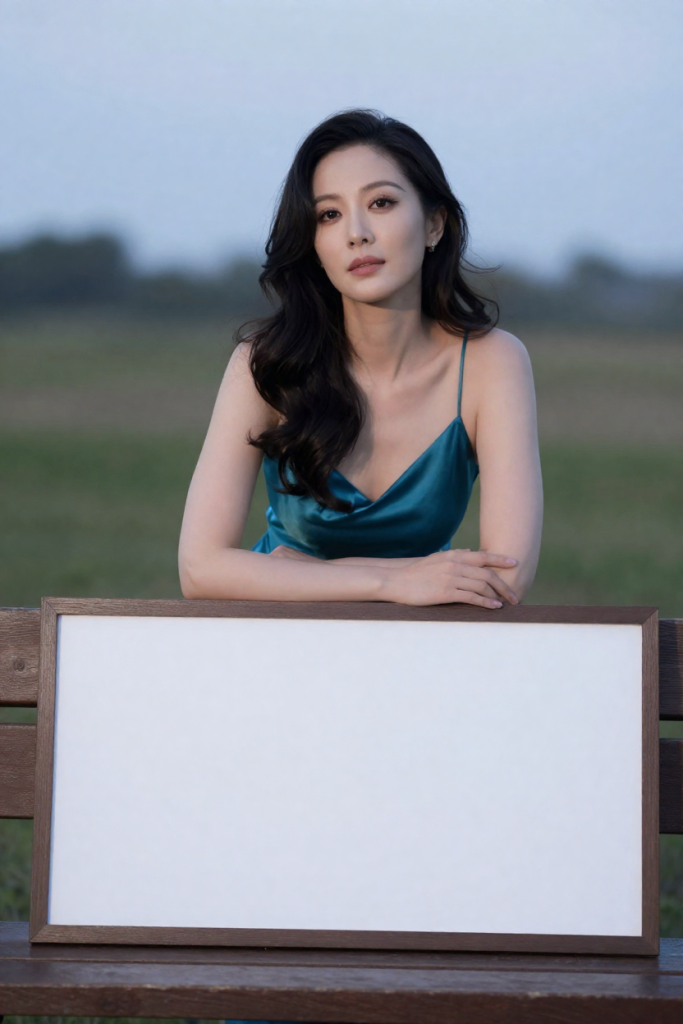
Wardrobe is where AI series go to quietly fall apart. Frame three wears the dress from frame one in a different colour; frame five invents a second neckline. The model is not being careless — it is resolving ambiguity, and ambiguity is what the brief handed it. Wardrobe writing is the art of leaving nothing to resolve.
One outfit per clause
Describe a single outfit in a single clause: garment, fabric, colour, one construction detail. “A burgundy satin slip with thin straps” is a wardrobe decision. “A burgundy slip, maybe lace, something elegant with a robe” is three outfits arguing, and the render will wear the argument. Layers are allowed — a robe over a slip is one outfit with two named parts — but each part gets its own fabric and colour, stated once.
Anchor the repeatables
Whatever must survive the series gets promoted into the saved character paragraph: the signature dress, the necklace, the way the robe is worn. Everything else may vary. Creators who paste the wardrobe clause unchanged across twelve frames are sometimes accused of being boring by creators whose heroine owns twelve different dresses in twelve frames and a following of none.
When it still drifts
Colour drift between frames is an editor job, not a re-render: 21 credits, the wrong region repainted, the original kept. Construction drift — the neckline itself changed — is a brief problem: tighten the clause, name the construction, and re-render that one frame. Diagnose before you spend; half of wardrobe repair is knowing which bench the defect belongs to.